How to Do the Korean Gradient Lip
The step-by-step technique behind the Korean gradient ("lip lip") look, and which tint finishes actually blend well enough to pull it off.
Use the answer in this order.
- 01What the look actually is
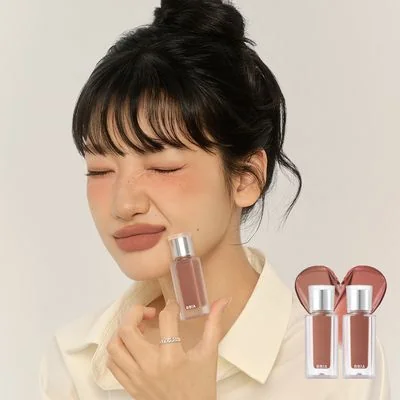
The Korean gradient lip (sometimes called “lip lip”) concentrates color in the center of the lips and fades it outward,
- 02Preparation and technique, step by step
Start with clean, product-free lips – leftover balm or gloss underneath makes a fresh tint slip and blend less predictably.
- 03Why finish choice matters here
A thin, buildable liquid tint blends outward more forgivingly than a full-coverage matte,
What the look actually is
The Korean gradient lip (sometimes called “lip lip”) concentrates color in the center of the lips and fades it outward,
rather than filling the whole lip evenly the way a traditional lipstick application does.
The result reads softer and less deliberate than a fully lined lip – closer to a natural flush than a made-up shape. It’s a technique,
not a product category: any lip tint can be applied this way, though some finishes make the fade easier to pull off than others (see below).
Preparation and technique, step by step
Start with clean, product-free lips – leftover balm or gloss underneath makes a fresh tint slip and blend less predictably.
Dab tint onto the center of both lips only – don’t line or fill the whole lip first. Press lips together once to spread the color slightly,
then use a clean fingertip to pat and blend outward from the center, leaving the outer edges noticeably lighter than the middle.
Build up the center with a second light dab if you want more intensity, blending again after.
Why finish choice matters here
A thin, buildable liquid tint blends outward more forgivingly than a full-coverage matte,
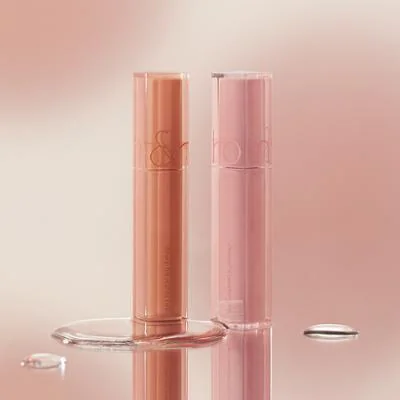
since you’re relying on your fingertip to soften the edge rather than a hard product boundary. rom&nd Dewyful Water Tint is a good example of the thin,
easy-to-blend texture this technique wants. this Over Blur Tint‘s softer, blur-style finish also blends well since it’s not going for a fully flat,
opaque edge to begin with – a hard-set velvet or matte tint (see our matte lip tint guide) is harder to feather cleanly.
Two different gradient results from the two finishes
These two finishes don’t produce quite the same look. rom&nd Dewyful Water Tint‘s thin, watery texture gives the classic wet, dewy gradient –
a bright center fading to a sheer wash, with visible shine throughout. this Over Blur Tint gives a softer, more powdery-looking fade with less shine –
a reasonable pick if you want the look without the wet-look shine that usually comes with it.
Neither is more “correct”; they’re two finishes on the same underlying technique.
Common mistakes
Applying too much product before blending is the most common issue – it’s easier to build up a light layer than to blend down an over-applied one.
Blending with a brush instead of a fingertip tends to leave visible strokes rather than the soft, diffused edge the look is going for;
fingertip application (with clean hands) genuinely works better here.
Making it last
Because this look relies on a soft edge rather than a filled-in shape, touch-ups are simpler than with a fully lined lip –
just re-dab the center and blend again rather than redoing the whole lip. A glossy or watery tint will need this touch-up sooner than a longer-wearing finish;
see our long-lasting Korean lip tint guide if you want the look to hold up longer between blends.
A note on lip liner
The technique doesn’t require lip liner at all, and most Korean gradient looks skip it entirely – the soft, undefined edge is the point.
If you do want slightly more shape without a hard line, a liner in a shade very close to your natural lip color, blended rather than left crisp,
is the more common approach than a visibly darker liner outline.
Frequently asked questions
Can you do a gradient lip with a matte tint?
It’s possible but harder – a full-opacity matte or velvet tint sets into a harder edge that’s less forgiving to blend with a fingertip than a thinner, buildable liquid tint.
Do you need a lip brush for the gradient look?
No – a clean fingertip generally blends the center-to-edge fade more naturally than a brush, which tends to leave visible lines instead of a soft gradient.
Is the Korean gradient lip the same as ombre lips?
They’re closely related – both fade color from the center or one area outward –
but the Korean version specifically centers the darkest color on the middle of the lips rather than, for example, a top-to-bottom fade.
Sources & methodology
This is a technique guide, not a product ranking, so no live ranking shortcode is used – the two named products are real,
currently tracked examples of finishes that suit the technique, verified against the live catalog immediately before publishing, not a claim that they’re the only options.
See our methodology, data sources, and editorial team.
See What’s Ranking Now
Continue with current, source-labelled K-beauty rankings.
See current lip-tint rankings →Continue the topic
Sources & Methodology
This Guide uses the explicit article record for intent, exact product identity, ranking eligibility and related links. Product images come from the tracked exact product record; an uncertain match is omitted. Named marketplace positions are source-specific listing visibility, not sales, market share, total popularity or a combined score. KBeautyVibe compared published product information and source records; this page does not claim personal testing. Read our methodology.